“Carnival Week in Sunny Las Los” (E70)

  • Originally printed: DAC News, November 1929
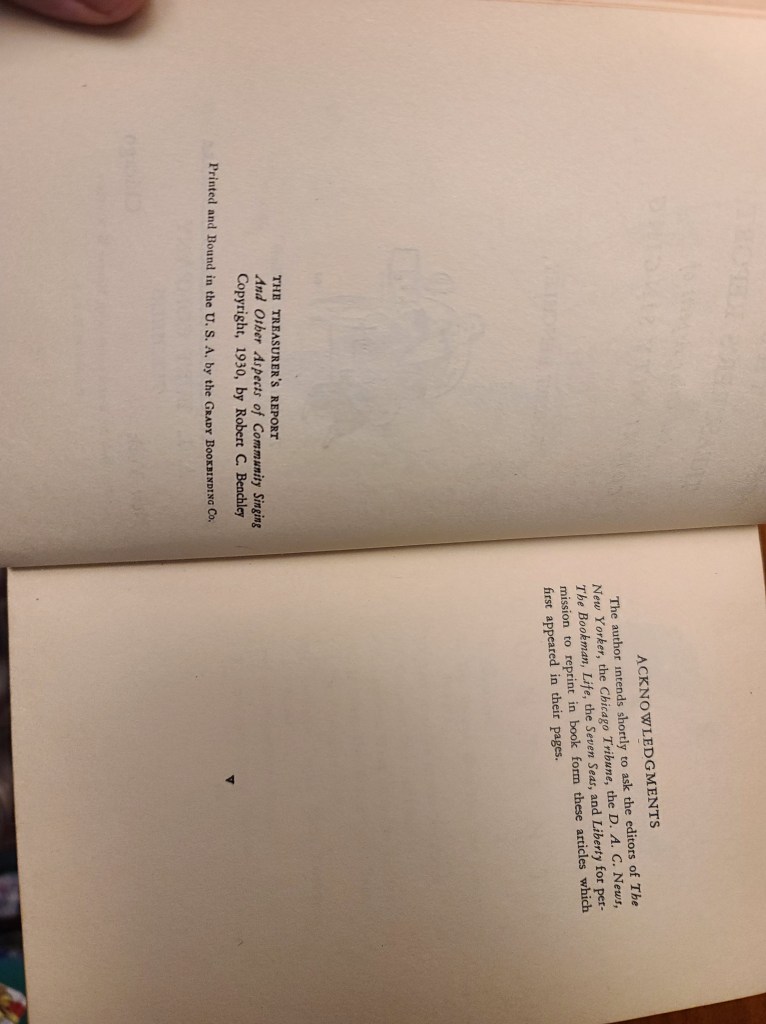
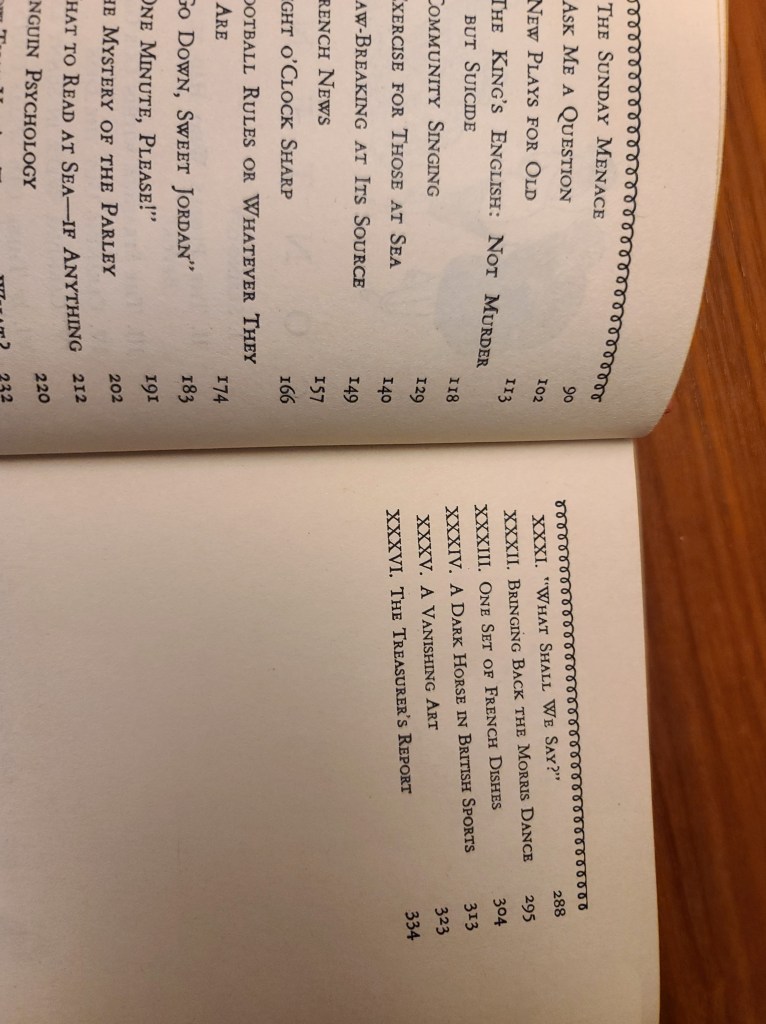
  • First reprinted: The Treasurer’s Report; And Other Aspects of Community Singing  
  • Original Byline:  Robert C. Benchley; Drawings by Gluyas Williams

🦉

Comments:

No cause for celebration here! This one is best avoided unless you’re engaged in a bibliographic undertaking of your own. Of course, it’s never wise to confuse a fictional persona with the author of a piece, but even if you interpret “Carnival Week in Sunny Las Los” as an implicit critique of this callow WASP vacationer’s ethnocentrism and horror of “southern Europeans”, all you get is a string of rancid olfactory gags that, in the words of Benchley’s New England forebear Roger Williams, “stink in God’s nostrils”.

The essay does demonstrate, if this was ever in doubt, that Benchley’s unique sense of whimsey depends heavily upon the context it careens through. As a humorist, he is at his best when he can take two-sided shots at both the little man and his modern American world. Transplant that same suburban stumblebum to the Pyrenees and his qualms and reservations become the barbs and prejudices of a dollar-wielding bully. We’ve examined the perils of this mode before – see “A Brief Study of Dendrophilism” (E60) – but here it finally drags Benchley down to the level of a one-owl rating.

Favorite Moment:

Europe has often claimed that Las Los was not part of it, and in 1356 Spain began a long and costly war with France, the loser to take Las Los and two outfielders.

Reprint Notes:

  • First and third Williams illustrations missing (why on Earth did they leave out the drawing of Benchley and the bull!? It’s the only fun thing about this essay.)
“Bringing Back the Morris Dance” (E62)

  • Originally printed:  Detroit Athletic Club News, June 1929
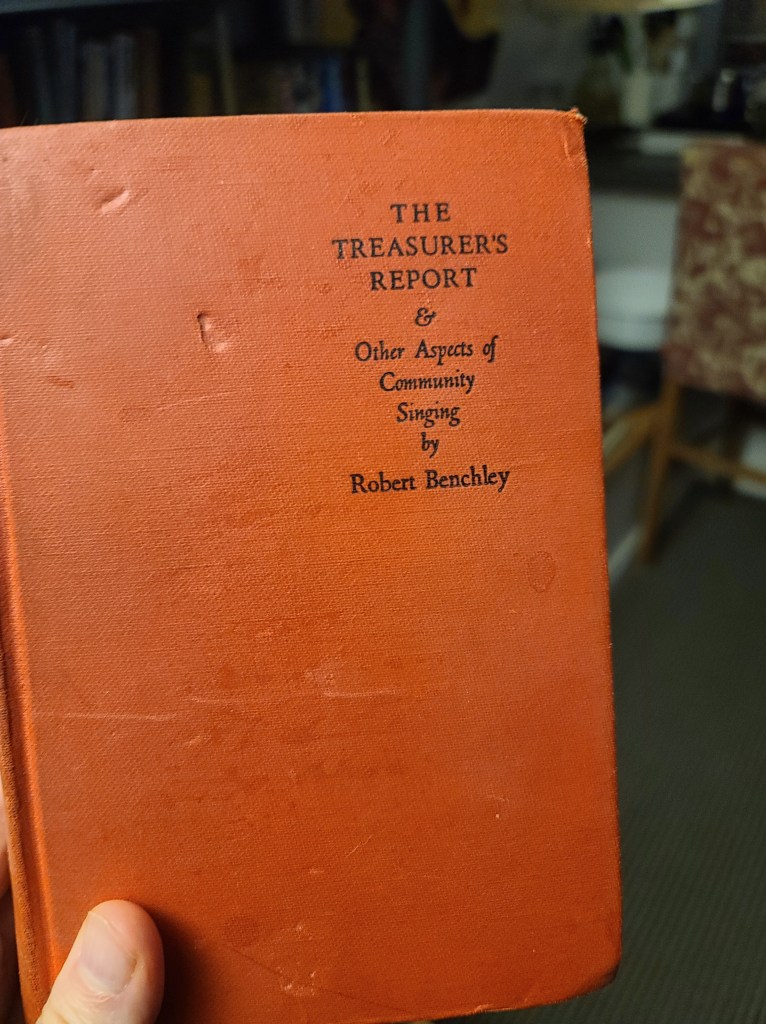
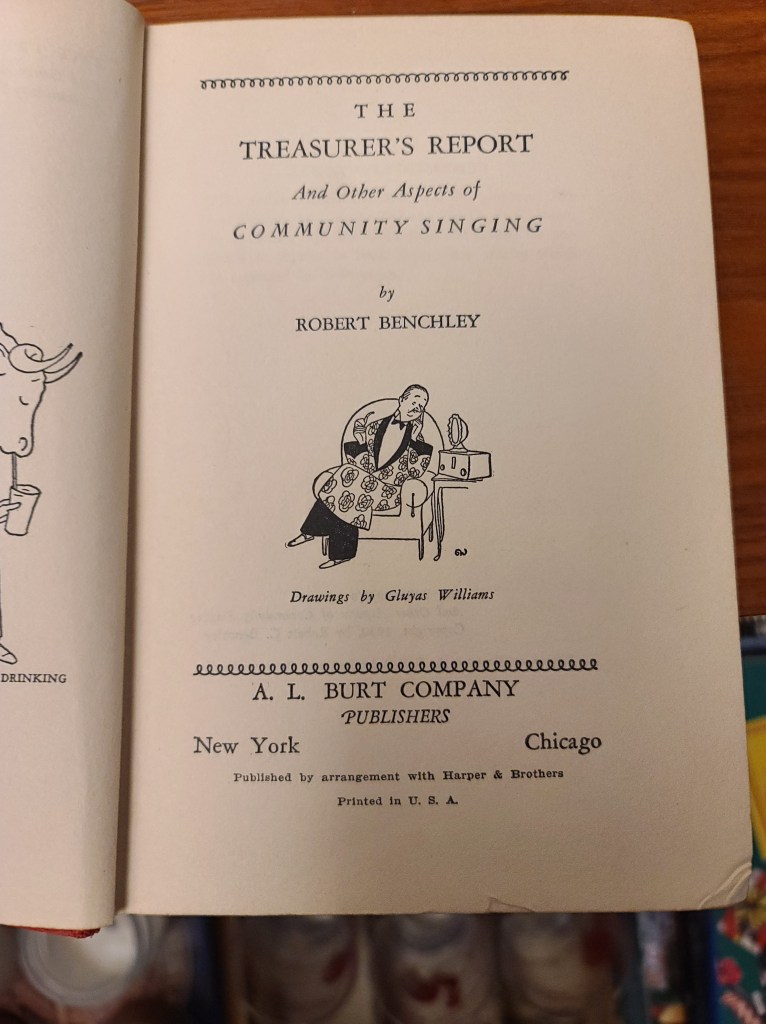
  • First reprinted in:  The Treasurer’s Report and Other Aspects of Community Singing (1930)
  • Original Byline:  Robert C. Benchley; Drawings by Gluyas Williams

🦉🦉🦉🦉

Comments:

Patented Benchley refutation-by-recommendation, with the author pushing good old-fashioned Morris-dancing until the jig goes up in smoke. Adopting a one step forward, two steps back approach to physical fitness advocacy, the author trips repeatedly over his exhortation to orbit a pole. Soon, we reel haphazardly into history, as RB’s persona searches in vain to discover some deep-seated folk reason for engaging in the rhythmically strenuous life. Benchley takes issue with those who would draw a parallel between Terpsichorean worship and sexual congress – arguing that the caloric requirements of the former push all possibility of the latter into sometime next week – but he accedes to the contention that these frenetic displays might bear some metaphorical relationship to the chaotic forces which threaten to rip our cosmos asunder. Benchley’s ramble through the ages yields few factoids to entice himself or his readers away from their places at the bar – at least, not until he returns to his original notion that Morris-dancing ought to have something to do with Morris chairs. It doesn’t, but that doesn’t stop our author from sitting this one out.  

Favourite Moment:

We are told that, in Merrie Englandie, one of the dancers was always decked out as Robin Hood ‘with a magpye’s plume to hys capp and a russet bearde compos’d of horses hair,’ which is as lousy spelling as you will see grouped together in any one sentence anywhere. At first, the only music was that of the bells, but that got pretty tiresome after a while and they brought out a flute or ‘tabor,’ which probably added nothing. I can, offhand, think of nothing more dismal than that must have been.  

Reprint Notes:

  • All text and illustrations reprinted

“Another Uncle Edith Christmas Yarn” (E18)

  • Originally printed: DAC News, December 1929
  • First reprinted in: The Treasurer’s Report, and Other Aspects of Community Singing
  • Also Reprinted in: Benchley Beside Himself; The Benchley Roundup; and A Good Old-Fashioned Christmas (naturally)
  • Original Byline: Robert C. Benchley (Drawings by Gluyas Williams)

🦉🦉🦉🦉

Comments:
As first seen in the 1920 “Bedtime Stories” centered on Georgie (E6) and Lillian (E7), any Benchleyan raconteur who aims to entertain the romper room set is stepping into a theatre of war. (A nautical war, in this case.) Like kindly Old Mother Nature before him, Uncle Edith is not above using Cossack methods to keep his audience in line. In fact, his leaky sea chronicle seems more like a pretext for administering drubbings and clapping hecklers in irons than an attempt to edify or enthrall.

The yarn within the yarn, such as it is, involves Edith’s mystifying mid-Atlantic meeting with a ghost ship full of sleeping Hessian troopers – the mystification due chiefly to the old salt pork’s dead calm approach to the science of narrative momentum. However, just as this miserable tale threatens to settle into something like a permanent trench, three-year old Philip, the secret hero of the piece, breaks free from the brig and steals Edith’s thunder with a rousing account of his thrust up San Juan Hill with Teddy and his Rough Riders. Thus, Uncle Edith is decidedly on his back foot (or perhaps, as Marian suggests, over backwards with his feet in the air) when he snaps the immortal rejoinder: “Who the hell said anything about Christmas?”

Favourite Moment:
“Anyway, I do know that we sailed from Nahant on the fourteenth March.”
“What are you – French?” asked little Philip. “The fourteenth March.”

Reprint Notes:

  • In all cases, the piece was reprinted under the title “Another Uncle Edith Christmas Story”.
  • The Treasurer’s Report reprint excises Little Philip’s entire battle saga, drastically altering the balance of power between Uncle Edith and his antagonistic auditors and keeping the avuncular avenger firmly at the center of piece. Much more firmly than he deserves.